Introduction
Are you sick and tired of your homemade cakes crumbling into bricks or becoming all gummy every time? Finding the best gluten-free flour in South Africa can be a daunting task for most bakers in the area. This guide will help you understand the types of flour suitable for various recipes in our sunny country. You will be told about local grains available, binding agents, and how you can make your own blends. We would like to ensure that your kitchen experiments are successful in delivering tasty, safe snacks for all.
The Essentials of Gluten-Free Baking Flour
Gluten-Free Flour for Baking will require a slight change in your mindset about pantry staples. Gluten is the wheat protein that gives bread its structure and that delicious chew that we all love so much. Once you take it out, you must find another way to keep your ingredients in place. A mix of various flours and starches is the most common technique of many successful recipes to reproduce that particular wheat texture.
Types of Local Flour You Should Be Aware of
South Africa is also fortunate to have several fantastic naturally gluten-free grains and tubers. Sorghum is an excellent local grain that adds a sweet, nutty flavour to your breads. Another brilliant alternative, replicating the behavior of wheat in most cookie recipes, is cassava flour. A typical base is rice flour as it is tasteless and extremely light in texture. Maize flour is also common and provides a lovely golden tint to the muffins and savoury bakes. All these options have a special trait to add to your mixing bowl when you are in a rush to bake something.
Making Your Own Home-Cooked Flour Blends
Most bakers in South Africa are experimenting with their own Gluten-Free Flour for Baking to get the best output. It is a 40 per cent whole grain flour to 60 per cent white flours or starches. Tapioca starch, when mixed with brown rice flour in the same quantity, can be used instead of potato starch. At least this ratio will guarantee you do not end up with a product that is too heavy or too gritty for your palate. It is important to keep your own blend in an airtight container so that it will not go bad until you can use it in future baking projects.

The Secrets to Good Texture
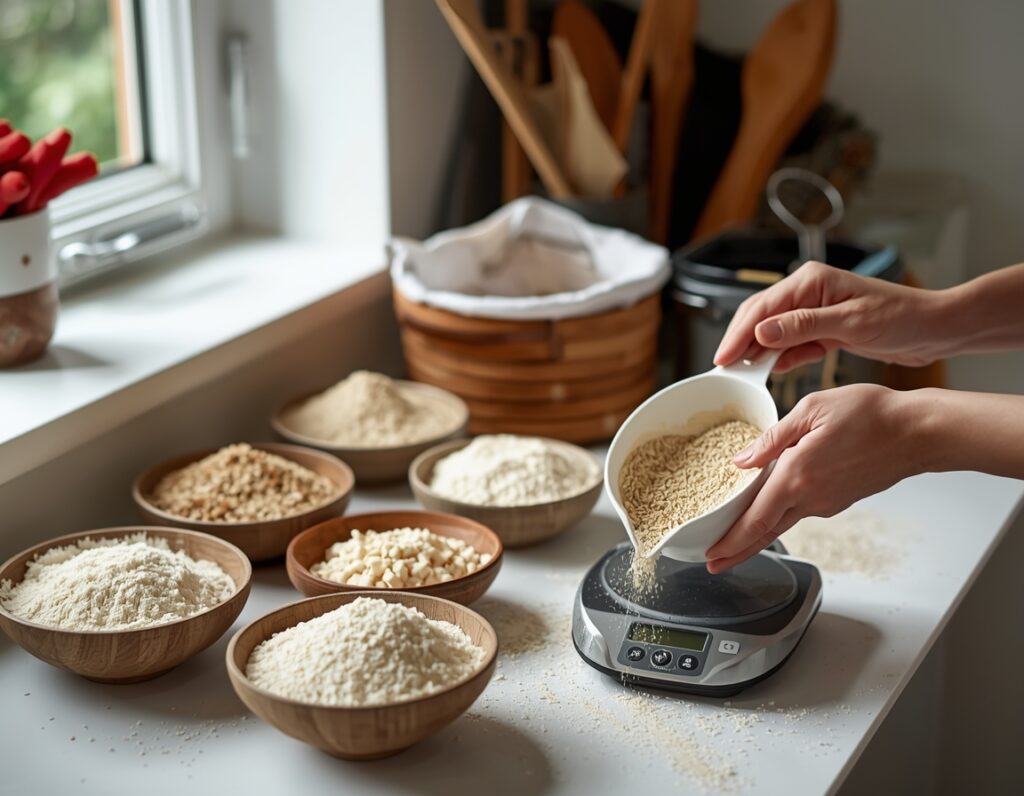
Generally, a thirty-minute rest may be of good help in between putting your batter into the oven and releasing the gas. This laziness allows time to hydrate the flour fully, hence producing a significantly smoother crumb. Your ingredients are also far more precise to weigh them with a scale as compared to measuring cups.
Which gluten-free flour to use to prepare Baked Goods?
As you are making a good number of rusks, you may wish to add a little more sorghum or millet to give them a more rustic crunch. There is a need for a mixture that will not get too tough or too tough, yet retain the structure of pastry, at a low temperature. Bread dough will embrace added protein flours like chickpea or quinoa to help them rise better and higher.
Conclusion
The discovery of the proper Gluten Free Flour South Africa is an adventure that results in spectacular kitchen success. We have examined the various varieties of flours, or the type that is best suited to us, and the role of binding agents as a key factor to success. Knowing this, you will be able to bake anything, including birthday cakes and classic South African dishes, with ease. You are now informed on how to prepare treats that are safe, healthy, and thoroughly delicious to all.
Want more tips, recipes, and baking inspiration with gluten-free flour? Visit our Facebook page to join our South African baking community!
FAQs
Is almond flour a direct replacement for wheat flour?
No, almond flour has much more fat and lacks the starch to provide it with a firm structure.
Then why do my gluten-free breads always seem so thick and heavy?
This normally occurs when the moisture content is too small or the raising agents are not strong enough.
Would xanthan gum necessarily complement my flour mixtures?
It is a fundamental component in the majority of recipes, yet it is packed with some store mixes.
How do I store my gluten-free flour in South African heat?
I believe that it would be more appropriate to store them in the fridge or the freezer so that the natural oils would not be wasted.